Confined space work
Gas testing, entry and exit rules, the attendant’s role and rescuing a casualty from a confined space.
Free consultation and quote
HSE Company group clients

















About the course
People do not notice the air has become dangerous
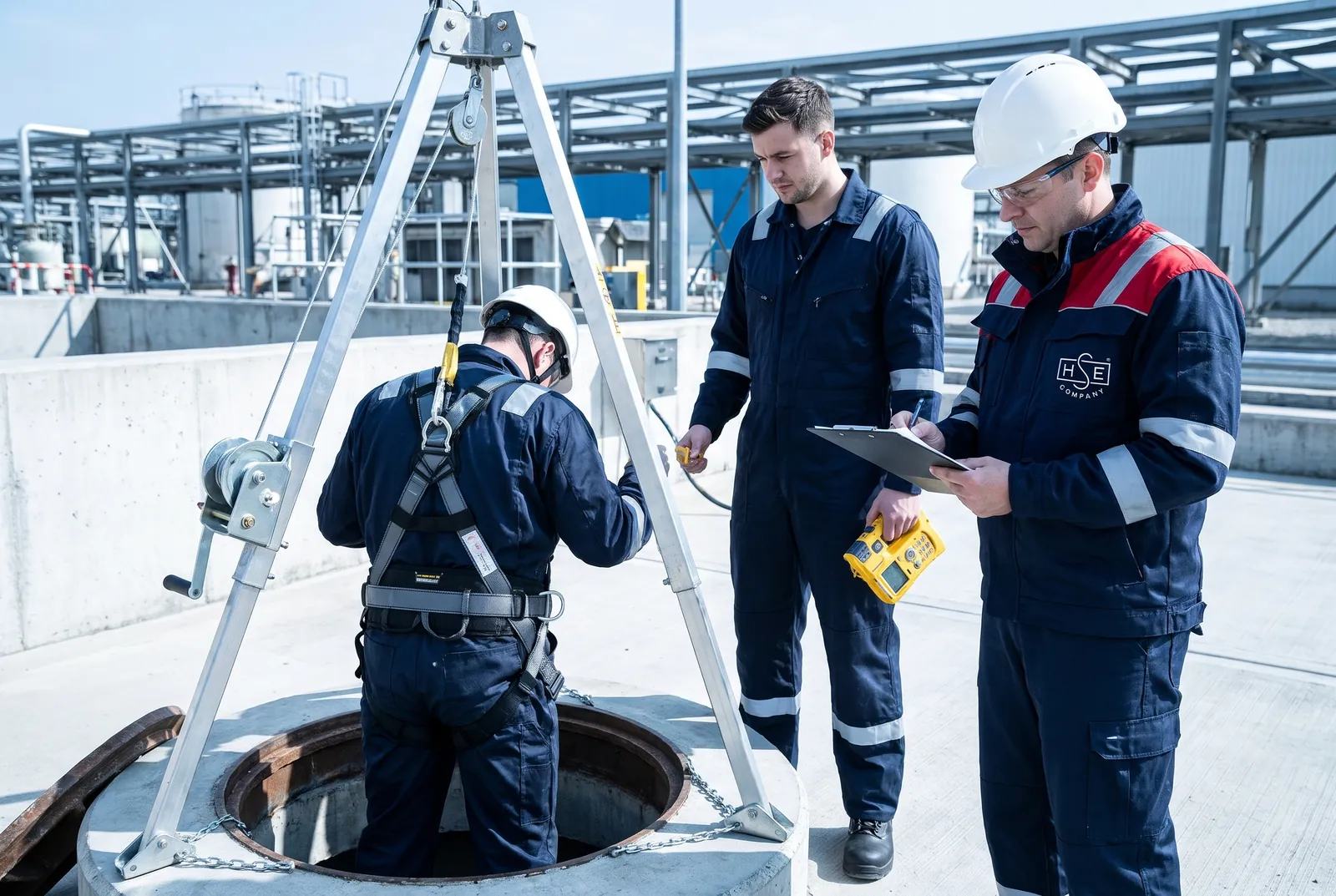
A confined space is a place with limited entry and exit, not designed for people to stay in. The air inside may be unfit to breathe, and people do not notice in time. This is one of our toughest courses: participants learn to test the atmosphere before entry, work with an attendant and pull out a casualty without going in unprotected.
- Atmosphere
- Lack of oxygen, toxic and flammable gases. They cannot be detected without a gas detector.
- Entry and exit
- A narrow hatch and a vertical descent. Getting out alone when feeling unwell is almost impossible.
- Rescue
- Trying to help without training and equipment leads to more casualties.
Where it applies
Which spaces count as confined
Wells and collectors
Sewers, water supply, cable tunnels.
Tanks and cisterns
Containers for petroleum products, water and chemicals.
Shafts and tunnels
Underground structures and passages.
Silos, hoppers, vessels
Process vessels and equipment.
Roles
We train everyone involved
In a confined space it is often not only the first worker who is hurt, but also the person who rushed to help. That is why we practise rescue hands-on: lifting a casualty with a tripod and winch without sending a rescuer down.
Entrant
Uses a harness and respiratory protection and knows the warning signs.
Attendant
Keeps in contact, watches the instruments and starts the rescue without going in.
Work supervisor
Issues the work permit, checks the area and equipment and decides on entry.
Programme
What the course covers
- 01What counts as a confined spaceCriteria, classification and examples at your site.
- 02Gas testingUsing a gas detector, measurements before entry and during work.
- 03Work permitArea preparation, ventilation, isolating equipment.
- 04Protective equipmentHarness systems, respiratory protection, communication.
- 05Entry and exitDescent, work and ascent procedure, the attendant’s duties.
- 06RescueRescue plan, casualty evacuation, first aid.
Documents
What you receive
We issue documents for every employee and closing documents for your accounts department.
Certificate
Standard form, for every employee.
Knowledge assessment record
Issued by the exam board after the exam.
Closing documents
Contract, invoice, certificate of completion.
Format
Where and how training takes place
Training centre in Tashkent
Classroom sessions with equipment and PPE for practice on site.
On-site at your facility
We bring an instructor to companies in any region of Uzbekistan.
A group of your own employees
We form a group for your company and fit the schedule around shifts and rotations.
Documents for inspections
Certificates and records that meet inspectors’ requirements.
How we work
From request to certificate
Request
Send us a list of employees with positions and types of work. You can message us on Telegram.
Programme
We agree on the course content, dates and venue.
Contract
We sign a contract with your company, issue an invoice and prepare closing documents.
Training
Theory and practice with an instructor in Tashkent or at your site.
Documents
Knowledge test, certificates and a record for every employee.
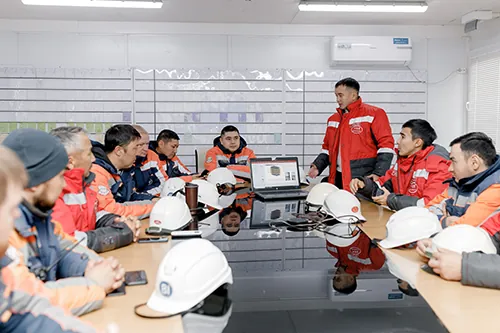
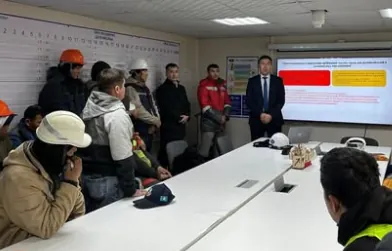
Photos
What our classes look like
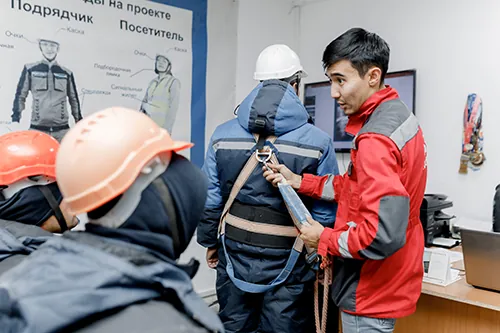
Practice with equipment and PPE, group sessions and on-site training.
Documents
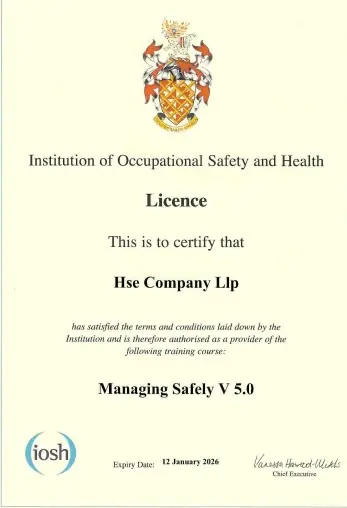
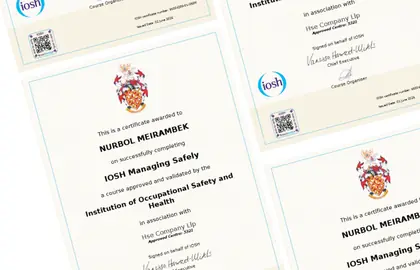
We work under an IOSH licence
The IOSH Managing Safely certificate is issued by the British institution IOSH.
Questions
Frequently asked questions
Didn't find the answer? Message us — we'll reply during working hours.
Ask on TelegramWho needs training?
Everyone involved: those working inside, attendants and work supervisors.
Is there hands-on practice?
Yes: working with a gas detector and harness, and lifting a casualty with a tripod and winch.
What document is issued?
A standard-form certificate and a knowledge test record.
Can the programme be adapted to our site?
Yes. Describe the spaces your people work in and we will tailor the programme and practice.
Free consultation
We will train your crew for confined space work
Tell us how many employees and their job titles. We'll pick the programme and suggest dates.
Request sent
Thank you! A manager will call you back during business hours. If you prefer, message us on Telegram: +998 50 018 02 78.