
IOSH Managing Safely International certificate
for managers
A course from the British institute IOSH for managers and supervisors. It teaches how to assess and control risks, investigate incidents and take responsibility for your team's safety.
Free consultation and quote
HSE Company group clients















About IOSH
The British institute that sets occupational safety standards
IOSH (Institution of Occupational Safety and Health) was founded in 1945 and brings together occupational safety professionals worldwide. The International Labour Organization recognises it as an authoritative non-governmental organisation. More than 160,000 people train on IOSH programmes every year.
- Licence
- The course runs under a valid IOSH licence; the certificate is issued by the institution.
- Who it's for
- Managers, supervisors and leaders at any level in all industries.
- Recognition
- International clients, investors and contractors know the certificate.
Who it suits
Who needs IOSH Managing Safely
The programme is not tied to one industry: managers in construction, production, oil and gas, logistics and offices take it.
Managers
Those who plan work and allocate resources, and so affect safety through their decisions.
Supervisors
Those who lead people on site every day and are the first to notice danger.
Leaders at any level
From site foreman to production director.
Contractors on international projects
When the client requires managers to have proven international training.
Programme
The 8 modules of Managing Safely
The course does not train narrow safety specialists. It gives managers the key knowledge to confidently manage safety in their area of responsibility.
- 01Introducing managing safelyWhy safety is part of a manager’s job and how it benefits the company.
- 02Risk assessmentHow to find hazards and assess risks on your site.
- 03Controlling risksThe hierarchy of controls: from eliminating the hazard to PPE.
- 04ResponsibilitiesA manager’s legal, moral and financial responsibility.
- 05Identifying hazardsTypical hazards in production, construction and the office.
- 06Incident investigationHow to find root causes rather than someone to blame.
- 07Measuring performanceHow to measure safety performance: active and reactive indicators.
- 08Protecting the environmentHow the company’s work affects the environment and what to do about it.
Result
What the participant and the company get
Participant
- Understands why safety is a mandatory part of any work process
- Can assess and control risks on their site
- Knows how to investigate incidents and find causes
- Reviews existing safety systems and introduces new controls
- Receives the international IOSH Managing Safely certificate
Employer
- Managers trained to an international standard
- A programme from a professional occupational safety body
- Occupational safety and safety engineering in one course
- An argument in tenders and with international clients
- A flexible schedule that fits production
Final assessment
How the certificate is earned
Test
A written test on all course modules at the end.
Project
A risk assessment of the participant’s own workplace: a practical task that goes straight into use.
IOSH certificate
After a successful assessment IOSH issues the IOSH Managing Safely certificate.
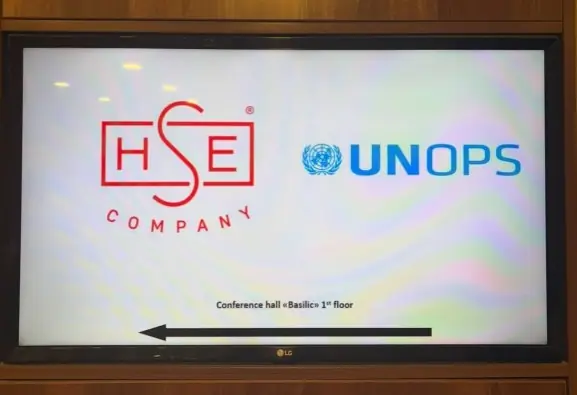
Experience in Tashkent
IOSH for UN staff in Uzbekistan
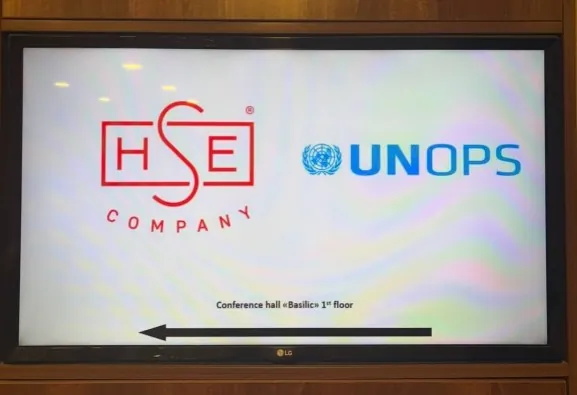
Our team ran IOSH Managing Safely for staff of UNOPS, the United Nations Office for Project Services, in Tashkent. International organisations choose the course because the certificate is recognised equally in different countries.
- Client
- UNOPS, the United Nations Office for Project Services.
- Where
- Tashkent, Uzbekistan.
- Result
- Staff received IOSH Managing Safely certificates.
Formats
How you can take the course
Open group
Participants from different companies in a classroom in Tashkent.
Corporate group
Only your managers, with examples from your operations.
Site visit
We run the course at the client’s site in any region of Uzbekistan.
Schedule around production
We split the sessions so managers do not drop out of work.
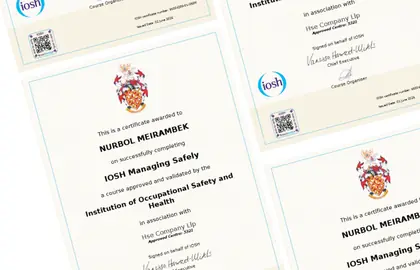
Documents
What you receive
We issue documents for every employee and closing documents for your accounts department.
- IOSH Managing Safely certificate
- Issued by the British institute IOSH. Recognised by international clients.
- Risk assessment project
- A ready-made risk assessment of the participant’s workplace that can be applied straight away.
- Closing documents
- Contract, invoice, certificate of completion.
Format
Where and how training takes place
Training centre in Tashkent
Classroom sessions with equipment and PPE for practice on site.
On-site at your facility
We bring an instructor to companies in any region of Uzbekistan.
A group of your own employees
We form a group for your company and fit the schedule around shifts and rotations.
Documents for inspections
Certificates and records that meet inspectors’ requirements.
How we work
From request to certificate
Request
Send us a list of employees with positions and types of work. You can message us on Telegram.
Programme
We agree on the course content, dates and venue.
Contract
We sign a contract with your company, issue an invoice and prepare closing documents.
Training
Theory and practice with an instructor in Tashkent or at your site.
Documents
Knowledge test, certificates and a record for every employee.
Photos
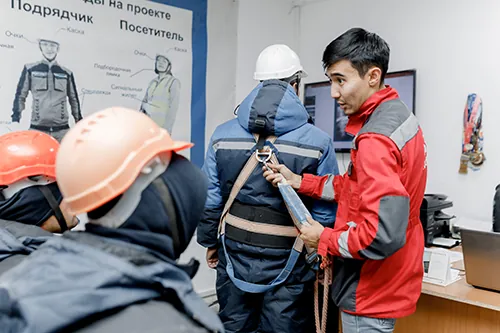
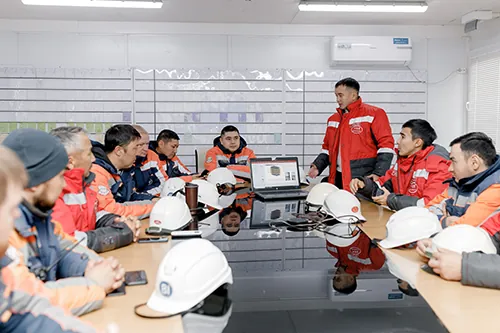
What our classes look like
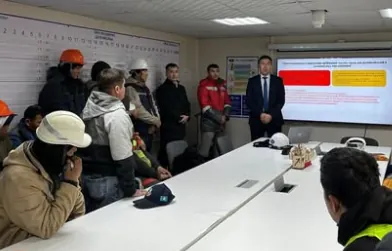
Practice with equipment and PPE, group sessions and on-site training.
Documents
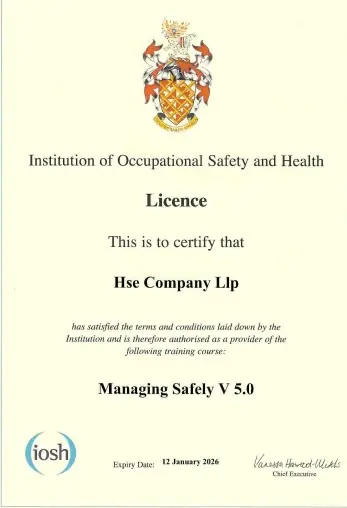
We work under an IOSH licence
The IOSH Managing Safely certificate is issued by the British institution IOSH.
Questions
Frequently asked questions
Didn't find the answer? Message us — we'll reply during working hours.
Ask on TelegramWho is IOSH Managing Safely for?
Managers, supervisors and leaders at any level in all industries. Especially those working with international clients and investors.
What document is issued?
The international IOSH Managing Safely certificate. It is issued by the British institution IOSH after a successful final assessment.
How does the final assessment work?
At the end of the course the participant takes a test on the modules and completes a project — a risk assessment of their own workplace.
Are you authorised to run the IOSH course?
Yes. SKS is a branch of HSE Company, and HSE Company is a licensed provider of IOSH Managing Safely. The course runs under this licence.
Does IOSH replace mandatory occupational safety training in Uzbekistan?
No. IOSH is an international programme. Mandatory training and knowledge tests under Uzbek law are taken separately, for example on the occupational safety and health course. We can run both.
Can you run the course just for our company?
Yes, we form a corporate group and fit the schedule to your shifts. We can run the course at your site.
How much does the course cost?
It depends on the number of participants and the format: open group, corporate or on site. Message us on Telegram with the number of people and we will calculate.
Free consultation
Sign up your managers for IOSH Managing Safely
Tell us how many employees and their job titles. We'll pick the programme and suggest dates.
Request sent
Thank you! A manager will call you back during business hours. If you prefer, message us on Telegram: +998 50 018 02 78.